The Dragon’s Spine
A cultural traverse of Bhutan, west to east
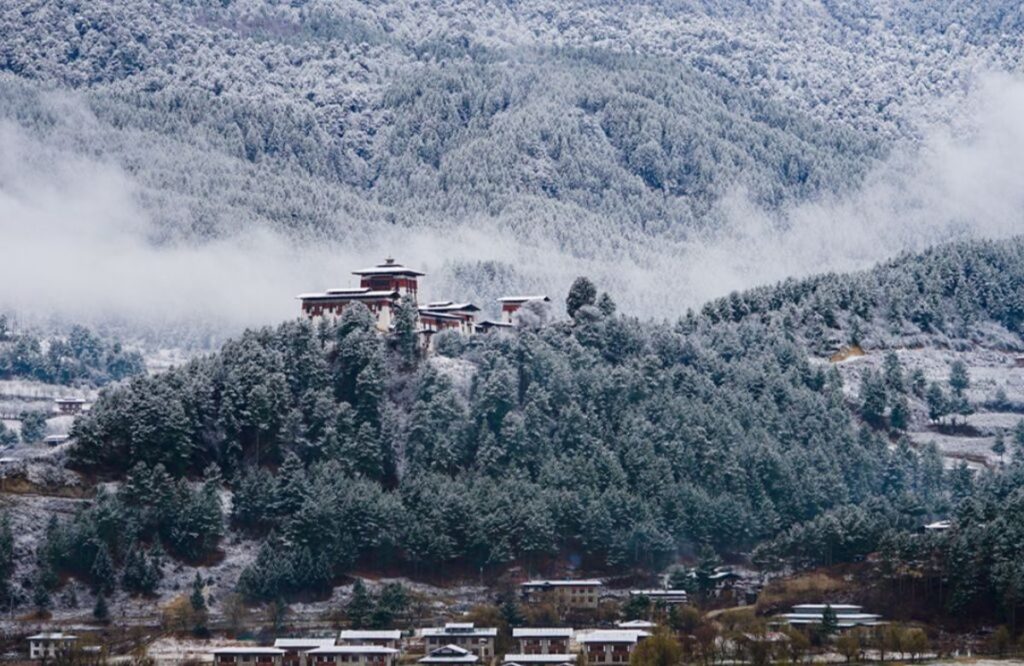
Most visitors to Bhutan see the western valleys and go home. This journey keeps going — over the Pele La into Trongsa, across the Thrumshingla pass at 3,780 metres, and down into an eastern Bhutan that receives a fraction of the country’s visitors and looks and sounds noticeably different when you get there.
Sixteen days gives us room to do it properly. Three nights in Paro and Thimphu to settle in and climb to the Tiger’s Nest without rushing it. Punakha and Phobjikha at the pace they deserve. Three nights in Bumthang, the spiritual heart of the kingdom, where the oldest temples are. Then east through Mongar and Trashigang to Trashi Yangtse, where the weaving is, before a short domestic flight carries us back over the whole range to Paro.
It is a long journey and there are two genuinely big driving days. We say so plainly, because they are the price of seeing a part of Bhutan most travellers never reach — and because the road over Thrumshingla, through cloud forest and prayer flags, is one of the great Himalayan drives.
Arrive Paro
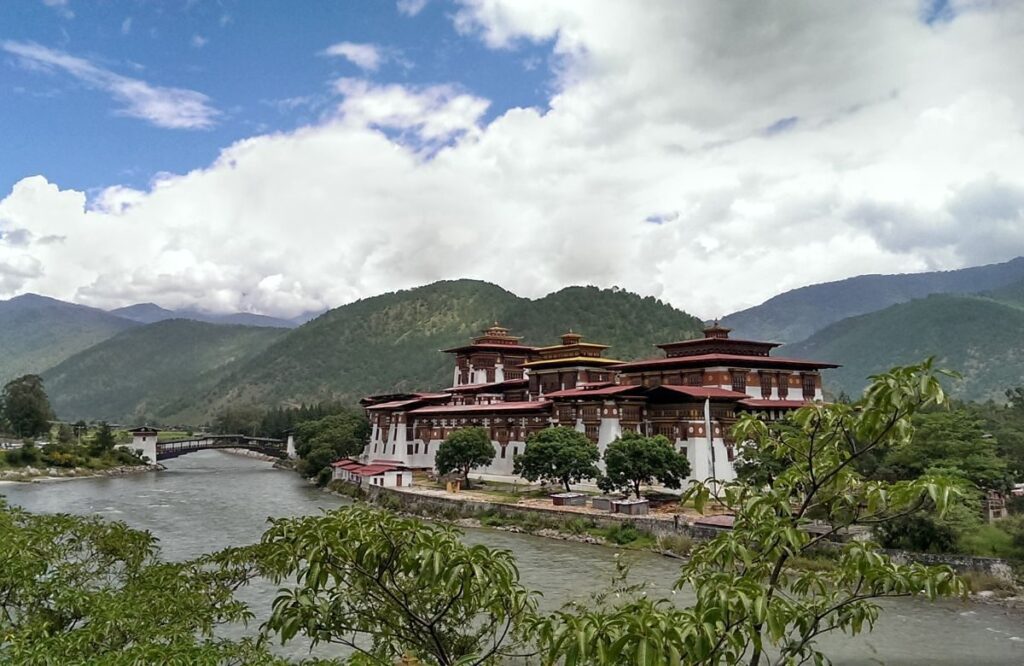
The flight in is part of the journey — the descent banks between ridges with the Himalaya on your left. Your guide meets you in arrivals. An easy first afternoon: Rinpung Dzong, the covered cantilever bridge below it, and an early night to let the altitude settle.
Paro — Taktsang
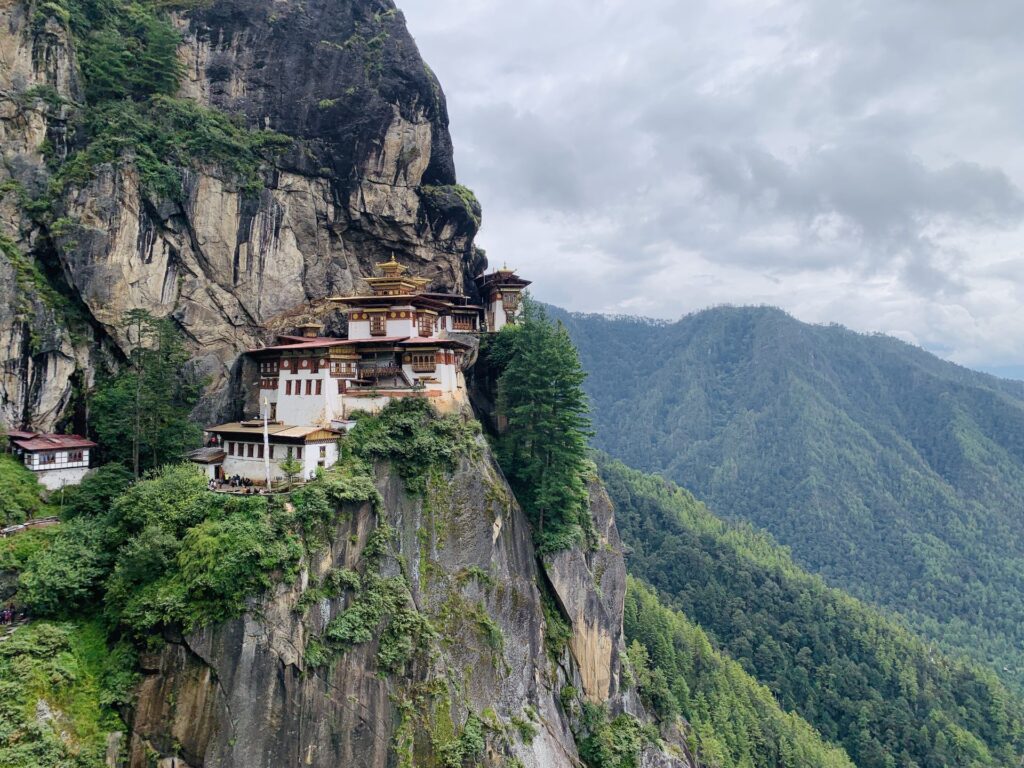
The Tiger’s Nest. We start at first light, before the coaches, and take it slowly: around 900 m of ascent over two to three hours, with the monastery appearing and disappearing through the pines. Afternoon free, and a hot stone bath if you would like one.
Paro to Thimphu
A short drive along the Pa Chhu to the capital. The National Memorial Chorten in the late afternoon, when Thimphu’s older residents circumambulate it, is the best introduction to the city you could ask for.
Thimphu
The Buddha Dordenma above the valley, the Folk Heritage Museum, the National Institute for Zorig Chusum where the thirteen traditional arts are taught. If it is a weekend, the market — which is where the whole city goes on Saturday morning.
Thimphu to Punakha
Over the Dochula pass at 3,100 m, where 108 chortens stand and, on a clear morning, the eastern Himalaya lines the horizon. Then down through changing forest into the warm Punakha valley. Chimi Lhakhang in the afternoon, reached on foot across the rice fields.
Punakha
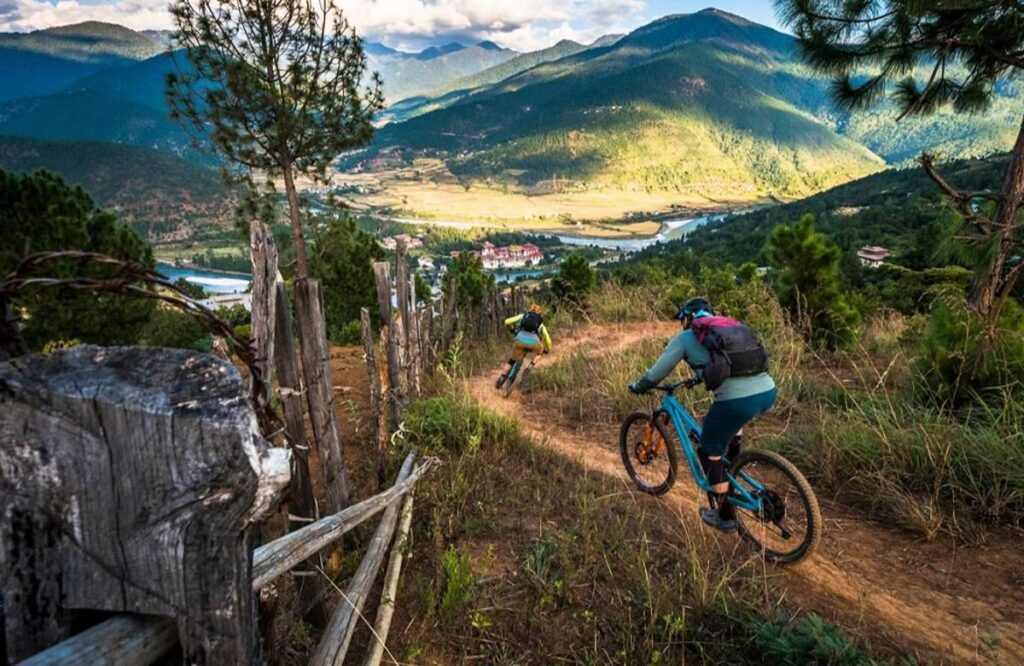
Punakha Dzong in the morning light, when the jacaranda is out if you have timed it right. Afterwards the walk up to Khamsum Yulley Namgyal Chorten — an hour uphill through paddy, and worth every step for the view back down the valley.
Punakha to Phobjikha
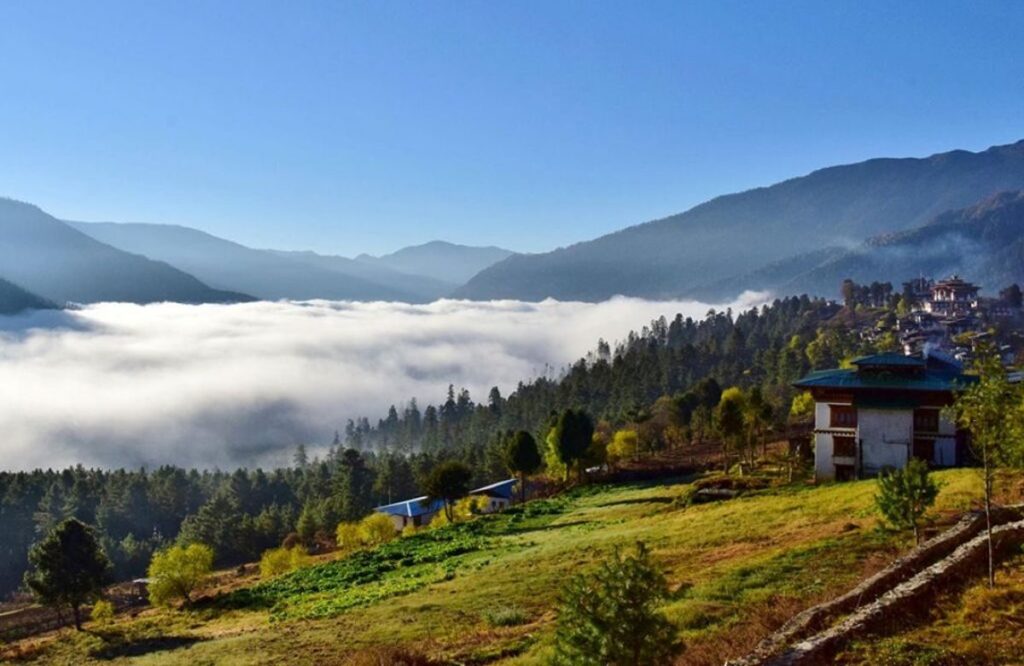
Climbing again, into the glacial valley where the black-necked cranes winter. Gangtey Goenpa sits at the head of it. The valley floor walk in the afternoon is flat, quiet and completely open — one of the most restorative hours of the trip.
Phobjikha to Trongsa
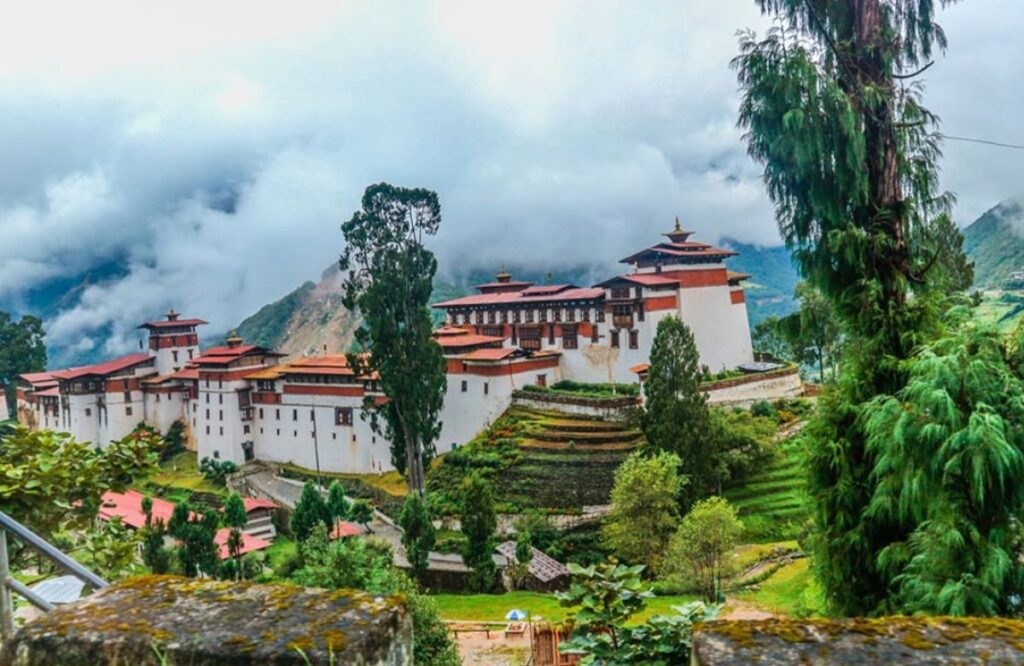
Over the Pele La and into central Bhutan. Trongsa Dzong appears long before you reach it, strung along a ridge above a gorge — the largest dzong in the country. The Tower of Trongsa museum, in the watchtower above, is the best-curated in Bhutan.
Trongsa to Bumthang
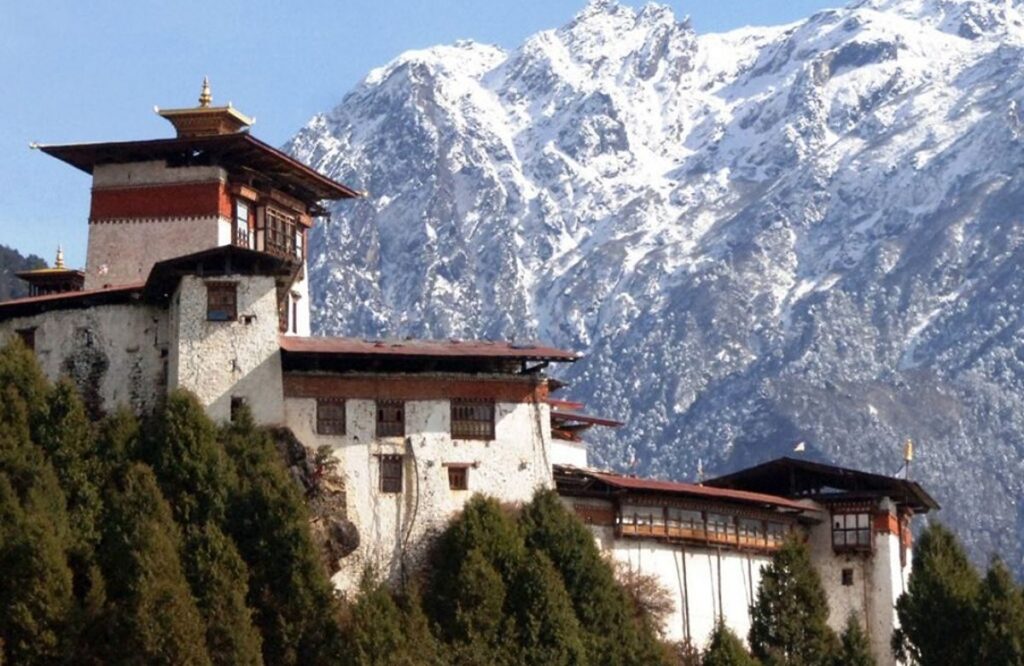
Over the Yotong La into the Chokhor valley. An easy afternoon — Jakar Dzong, and the first sense that Bumthang is different: wider, quieter, and thick with temples.
Bumthang — Chokhor valley
Jambay Lhakhang, said to be one of 108 temples founded in a single day in the seventh century. Kurjey Lhakhang, built around the cave where Guru Rinpoche meditated. Tamshing, with its 500-year-old murals. This is the densest day of the journey and we take it slowly.
Bumthang — Tang or Ura
Your choice, made on the day with your guide. Tang for the Burning Lake and the Ogyen Choling manor museum; Ura for the highest and most traditional of the four valleys, where the houses cluster like a European village.
Bumthang to Mongar
The big one. Over Thrumshingla at 3,780 m — the highest pass on the journey — through cloud forest, past waterfalls that fall onto the road, and down the long descent east. Seven hours, and among the most spectacular drives in the Himalaya.
Mongar to Trashigang
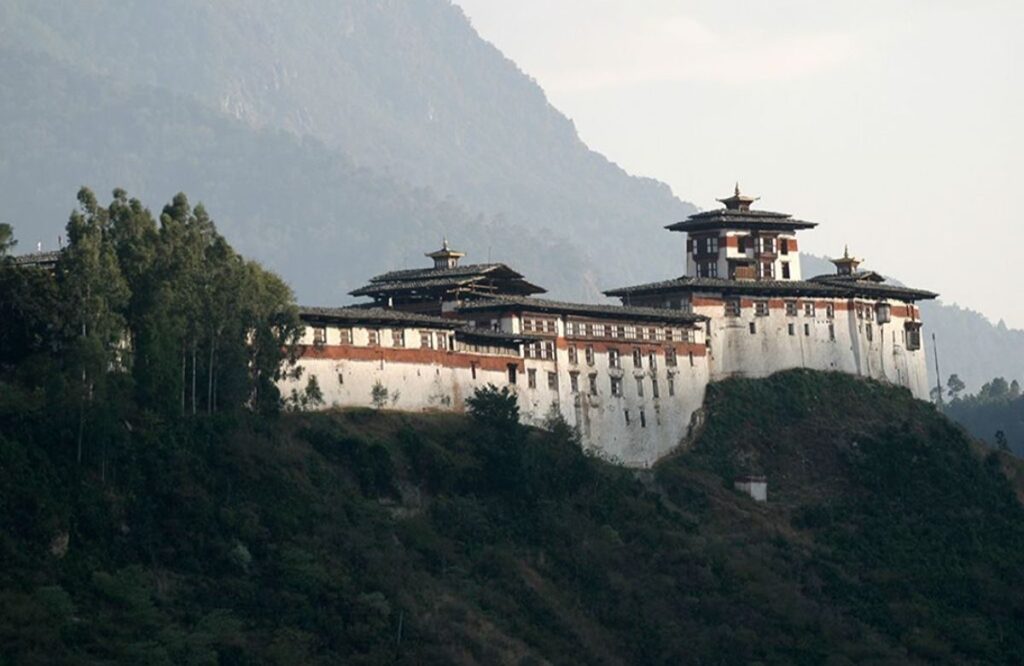
A shorter day, dropping to the Drangme Chhu and climbing to Trashigang — the largest town in the east, its dzong on a spur above the river. You will notice the change: warmer, lower, and a different language on the street.
Trashi Yangtse
North to Chorten Kora, modelled on Boudhanath in Kathmandu, and Gomphu Kora, where Guru Rinpoche is said to have subdued a demon. The weaving villages here produce kishuthara, the most intricate textile in Bhutan — we visit a house where it is still woven by hand.
Yonphula to Paro
A short drive to Yonphula and the domestic flight west, back over everything you have just driven — the whole traverse in fifty minutes, which is a startling way to end it. Afternoon free in Paro.
Depart
A last breakfast, and the short drive to the airport. Your guide will see you through check-in.
Replace this with your route map graphic — a simple line drawing over a Bhutan outline reads better than a Google map for a multi-stop journey.
This is a starting point
Sixteen days is our shape for this route — yours might be twelve, or twenty. Tell us what you want to change and we will redraw it.