Bhutan festival dates
Forty-five tshechus, drubchens and mountain festivals across 2026. Dates follow the lunar calendar, so they move every year.
A tshechu is not
a performance
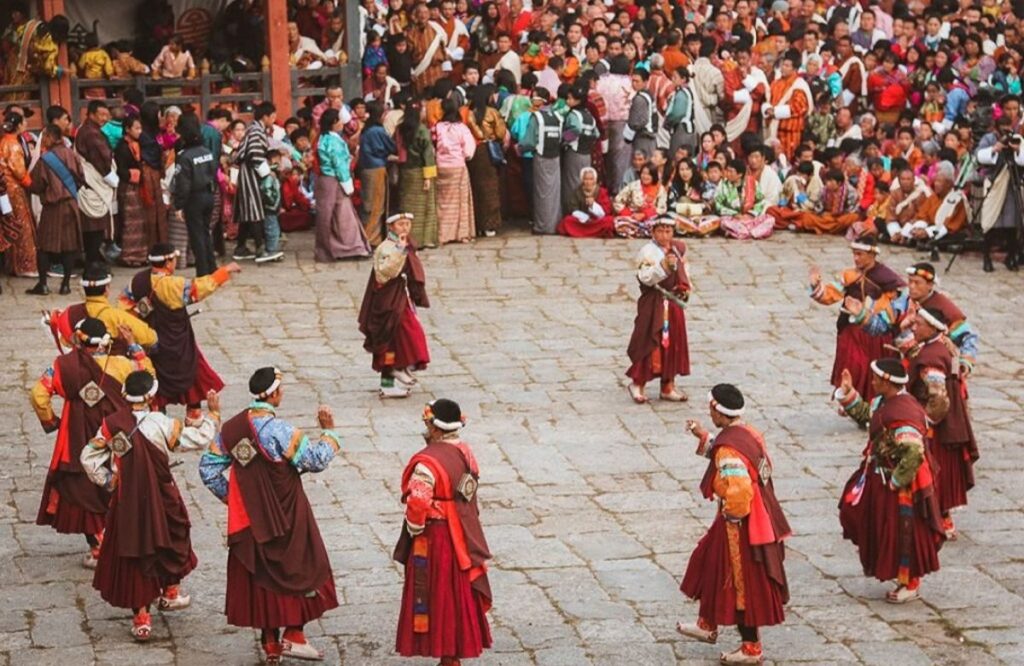
Tshechu means “tenth day” — the day of the lunar month associated with Guru Rinpoche, who brought Vajrayana Buddhism to Bhutan in the eighth century. Monks and lay dancers perform cham, masked dances that enact the triumph of wisdom over ignorance, in a dzong courtyard over three to five days.
The monks prepare for weeks beforehand, in retreat. Bhutanese families arrive in their best kira and gho, with coral and turquoise, and picnic through the day. Watching the dances is understood to carry merit — most people try to attend at least once in their lives.
Many festivals end at dawn on the final day with the unfurling of a thongdrel, a silk appliqué scroll several storeys high, displayed before sunrise and rolled away before the light touches it. If you attend one morning of one festival, make it that one.
Six worth building a trip around
Of the forty-five, these are the ones we would actually rearrange dates for.
Paro Tshechu
The largest festival in western Bhutan and the easiest to reach — an hour from the airport. Ends with the Guru Thongdrel unfurled before dawn on the final morning. Thousands attend; book a year out.
Thimphu Tshechu
The capital’s festival, and the busiest. Preceded by Thimphu Drubchen from the 17th. Convenient, spectacular, and crowded in the way that is part of the point.
Punakha Tshechu
Smaller, and our quiet recommendation. Follows the Dromchoe, which re-enacts the repelling of a Tibetan invasion with villagers dressed as ancient soldiers. Warm valley, late winter, far fewer visitors.
Jambay Lhakhang Drup
At one of the oldest temples in the kingdom. Known for the mewang fire ceremony and the tercham, a naked dance performed at midnight by firelight. Unlike anything else on the calendar.
Black-Necked Crane Festival
A single day, held by schoolchildren and villagers to mark the cranes’ return from Tibet. Small, warm and entirely unpolished — the opposite of a grand tshechu.
Royal Highland Festival
At 4,000 metres among the Layap herders — yak parades, highland sports, and about two hundred visitors. Reaching it requires a trek. Worth it.
Every festival, 2026
Grouped by month. Dates are set by the Bhutanese lunar calendar and are occasionally adjusted — we confirm before you book flights.
Jhomolhari Mountain Festival
Black-Necked Crane Festival
Jambay Lhakhang Singye Cham
Source: Tourism Council of Bhutan festival calendar. January, May, July and August have no major tshechus. 2027 dates are published by the Council later in the year — ask us and we will send them as soon as they are confirmed.
Six things worth knowing
Most festival trips go wrong in the same handful of ways.
Book eight to twelve months ahead
For Paro and Thimphu especially. It is not the hotel rooms that run out first — it is the good guides.
Arrive a day early
Festival mornings start before dawn, and a delayed flight into Paro should not cost you the day you came for.
The last morning is the one
Thongdrel unfurlings happen before sunrise and are over quickly. Plan to be there at 4am, not 9am.
Consider the smaller ones
Talo, Nalakhar, Gomphukora and Ura Yakchoe give you a village festival rather than a spectacle, with a fraction of the visitors.
Dress for it
Covered shoulders and knees, and something warm — courtyards are cold at dawn and you will be sitting on stone for hours.
Dates move
Every year. Never book non-refundable flights against a festival date until we have confirmed it against the Council’s calendar.
Build your journey around a festival
Tell us which one draws you, or tell us your dates and we will tell you what falls inside them. Either way we will confirm the dates before you book a flight.