Aether Bhutan Tours and Travel

Aether Bhutan Tours and Travel
The last Himalayan kingdom: closed to the world until 1974, still measuring its progress in happiness, and unlike anywhere else you have travelled.
Bhutan is a kingdom of about 800,000 people, wedged between India and Tibet, where the land climbs from around 200 metres in the southern foothills to over 7,000 metres along the northern border.
It was never colonised. It opened to foreign visitors only in 1974. And it remains the only country in the world that formally measures its progress by Gross National Happiness rather than economic output alone.
For a traveller this produces something unusual: a place where traditional dress is worn daily rather than performed for visitors, where new buildings must carry traditional architectural features by law, and where more than seventy per cent of the land is still forest.
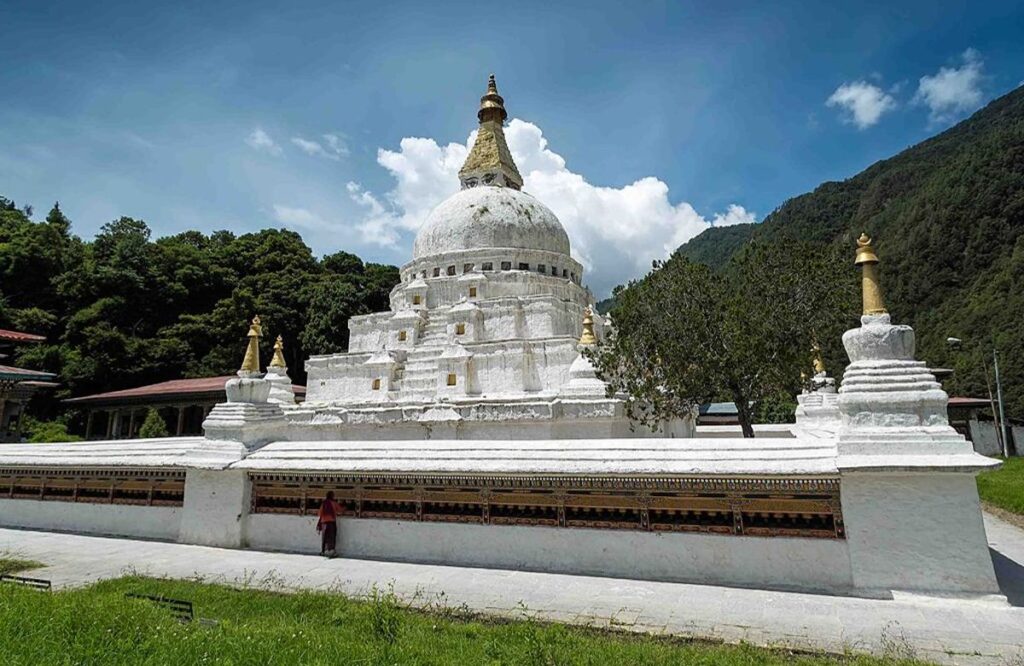
In 1972 Bhutan’s fourth king suggested that a country’s success might be better judged by the wellbeing of its people than by the size of its economy. It did not stay a philosophy. Gross National Happiness became the framework the country is actually governed by, resting on four pillars.
Growth that does not outrun what the country can carry.
Forest cover protected by constitution, not by policy alone.
Language, dress, architecture and craft kept in daily use.
A monarchy that handed power to its people, unprompted, in 2008.
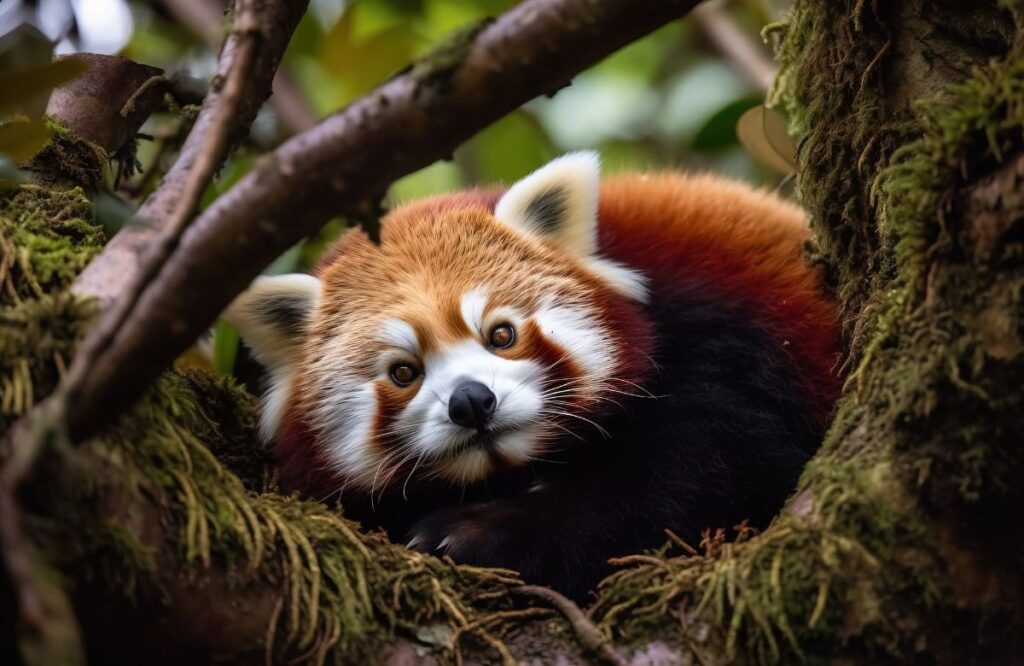
Bhutan absorbs considerably more carbon than it emits — one of very few countries on earth that can say so. Its constitution requires at least sixty per cent of the land to remain under forest cover in perpetuity; in practice the figure sits closer to seventy.
Mountaineering above 6,000 metres is prohibited, which is why Gangkhar Puensum — the highest peak in the country — remains the highest unclimbed mountain in the world. Plastic bags have been banned since 1999.
None of this is marketing. It is simply how the country is run, and it is a large part of why the valleys still look the way they do.
Bhutan is not toured in a straight line. It is a chain of valleys, each separated by a pass, each with its own weather, dialect and temperament — from Paro at 2,200 m to the glacial bowl of Phobjikha at 3,000 m.
There is no bad season in Bhutan — only different ones. Autumn has the clearest mountain views and the biggest festivals; winter has empty monasteries and the cranes.
Rhododendrons and Paro Tshechu.
Monsoon green, few visitors.
Clearest skies. Peak season.
Cold, bright, cranes arrive.
A tshechu is a religious festival held on the tenth day of a lunar month in honour of Guru Rinpoche, who brought Buddhism to Bhutan. Monks and laymen perform masked cham dances in the dzong courtyard, sometimes for three or four days. Families come in their finest kira and gho. It is a genuine act of worship that visitors are welcome to witness — not a performance staged for them.
National dress is worn daily by most Bhutanese: the gho, a knee-length robe, for men, and the ankle-length kira for women. You are not expected to wear either, but you are expected to dress with some care at religious sites.
Paro (PBH) is the only international airport, served by Drukair and Bhutan Airlines from a handful of Asian cities. Overland entry is possible via Phuentsholing.
Everyone except Indian, Bangladeshi and Maldivian nationals needs a visa arranged in advance through a licensed Bhutanese operator — we handle yours. A Sustainable Development Fee applies per adult, per night.
Entry rules and the Sustainable Development Fee are set by the government and have changed more than once in recent years. We confirm the current figures with you in writing before you commit to anything.
We are building these out one by one. If what you need isn’t here yet, just ask us — we’ll answer properly.
We will tell you honestly which season suits what you want, which valleys are worth your days, and which are not. Then we will build it around you.