Aether Bhutan Tours and Travel

Aether Bhutan Tours and Travel
The things people actually write to ask us, answered properly rather than in one line.
These are the questions that come up most often, grouped roughly in the order people think of them. We have tried to answer them the way we would on the phone — plainly, including the parts that are inconvenient.
Anything not covered here, write to us. A real person in Thimphu will answer, usually the same day.
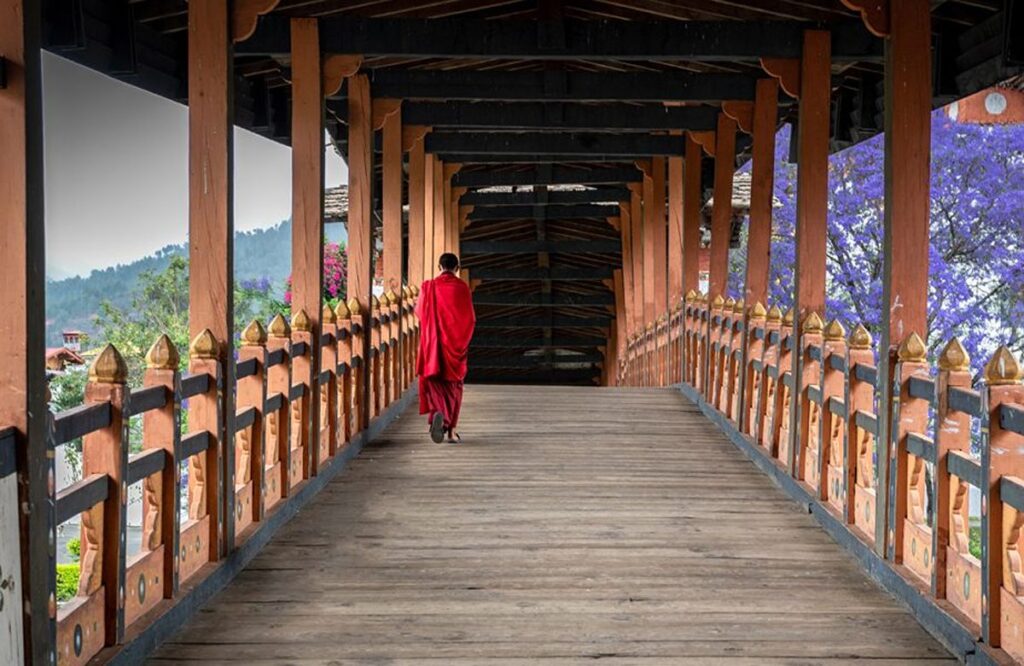
You can apply for your Bhutan visa directly online, or Aether Bhutan can manage the application on your behalf as part of your journey.
For October, November and the major festivals, eight to twelve months. The best lodges have very few rooms and they go early. For the monsoon or deep winter, two to three months is usually comfortable.
It depends entirely on where you sleep. The government’s Sustainable Development Fee is fixed per person per night; everything above that is your choice of lodging, and the range between a good guesthouse and a grand lodge is very wide. We quote a real figure after one conversation, not a price band.
Yes. Solo travel is common and entirely straightforward — you will have your own guide and driver. There is usually a single supplement, which we will show you clearly.
Very. Bhutanese people are warm with children and the pace suits families better than most Himalayan destinations. Reduced fees usually apply for younger children — we will confirm the current concession.
Common and easy — Kathmandu and Delhi are the two most convenient connections. We will build the Bhutan leg to fit around your other arrangements.
The ngultrum is pegged one-to-one to the Indian rupee, and rupees are accepted everywhere. Bring US dollars or rupees in cash to exchange. Euros and pounds are changeable in Thimphu but at poorer rates.
Sometimes. ATMs in Thimphu and Paro accept foreign cards more often than not, but not reliably enough to depend on. Larger hotels take cards; most restaurants and all shops in smaller towns do not. Carry cash.
Signal is good in the western valleys and patchy in the east and on the passes. Wi-fi is in nearly every hotel but slow. A local SIM is cheap and easy — your guide will arrange one on your first morning.
Tipping is not traditionally Bhutanese but is now normal with guides and drivers. There is no fixed rate; we will give you a sensible range for the length of your trip, and nobody will be offended either way.
Not from the tap. Bottled and filtered water is everywhere, and most good lodges now provide filtered water in glass to avoid plastic. Bring a refillable bottle.
Most of what you will see sits between 1,200 and 3,000 metres, where altitude sickness is uncommon. The passes go higher — Dochula at 3,100, Chele La at 3,988 — but you cross them rather than sleep on them. If you are trekking, that is a different conversation and we will plan acclimatisation properly.
Around 900 metres of ascent and three to five hours return, on a good path with a cafeteria halfway. It is a genuine hike, not a stroll — but people of a wide range of ages and fitness do it every day. Horses can carry you as far as the cafeteria.
Better than its reputation. Bhutanese cooking is chilli-forward — ema datshi, chillies and cheese, is the national dish and is properly hot. Hotels cook milder Indian, Chinese and continental food as well. Vegetarians eat extremely well here.
Yes, with notice. Vegetarian is effortless. Vegan, gluten-free and serious allergies need planning, particularly outside the western valleys, so tell us early and we will brief every kitchen in advance.
Layers, always — mornings and evenings are cold even in warm months. Proper walking shoes, a warm mid-layer, a light waterproof, and something modest with covered shoulders and knees for temples. A head torch is more useful than you would think.
Everything except international flights and personal spending: the Sustainable Development Fee, visa, all accommodation, a private guide and driver for the whole trip, meals, entrance fees and permits. We itemise it so you can see exactly what you are paying for.
Yes. One guide and one driver for your whole journey — never a different person in each valley. You will know them well by the end, which is rather the point.
It happens, particularly in the monsoon, because Paro is a visual-approach airport. We build a buffer into every itinerary and we hold your rooms. If a day is lost we rework the route rather than simply cutting the end off.
A real person in Thimphu reads every message, and answers properly — usually the same day, and without a sales pitch attached.