A tshechu is not
a performance
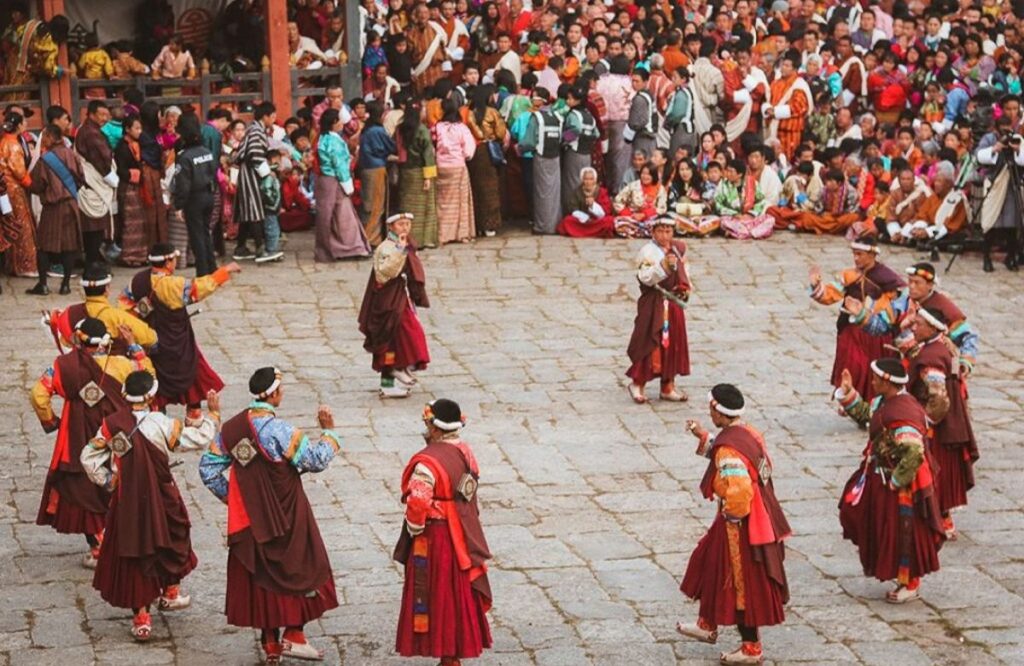
Tshechu means “tenth day” — the day of the lunar month associated with Guru Rinpoche, who brought Vajrayana Buddhism to Bhutan in the eighth century. Monks and lay dancers perform cham, masked dances that enact the triumph of wisdom over ignorance, in a dzong courtyard over three to five days.
The monks prepare for weeks beforehand, in retreat. Bhutanese families arrive in their best kira and gho, with coral and turquoise, and picnic through the day. Watching the dances is understood to carry merit — most people try to attend at least once in their lives.
Many festivals end at dawn on the final day with the unfurling of a thongdrel, a silk appliqué scroll several storeys high, displayed before sunrise and rolled away before the light touches it. If you attend one morning of one festival, make it that one.